Shackles connect almost every rigging assembly, and at LGH they're one of the most important parts of our hire fleet. We supply a wide range of shackles, from compact sizes you can hold in one hand to heavy-duty wide-body shackles that need lifting themselves. Every shackle we hire out is checked and certified by our engineers before it leaves our depot.
But a shackle's condition can change quickly once it's on site. A statutory thorough examination is essential, and under LOLER, lifting accessories such as shackles must be thoroughly examined by a competent person at set intervals, typically every six months. It doesn't replace a pre-use check, though. A lot can happen between examinations, including a dropped pin, a shock load or a week in a corrosive environment.
That's why the person rigging the lift should always give the shackle a quick check first. Whether it's carrying 5t or 500t, it deserves the same scrutiny.
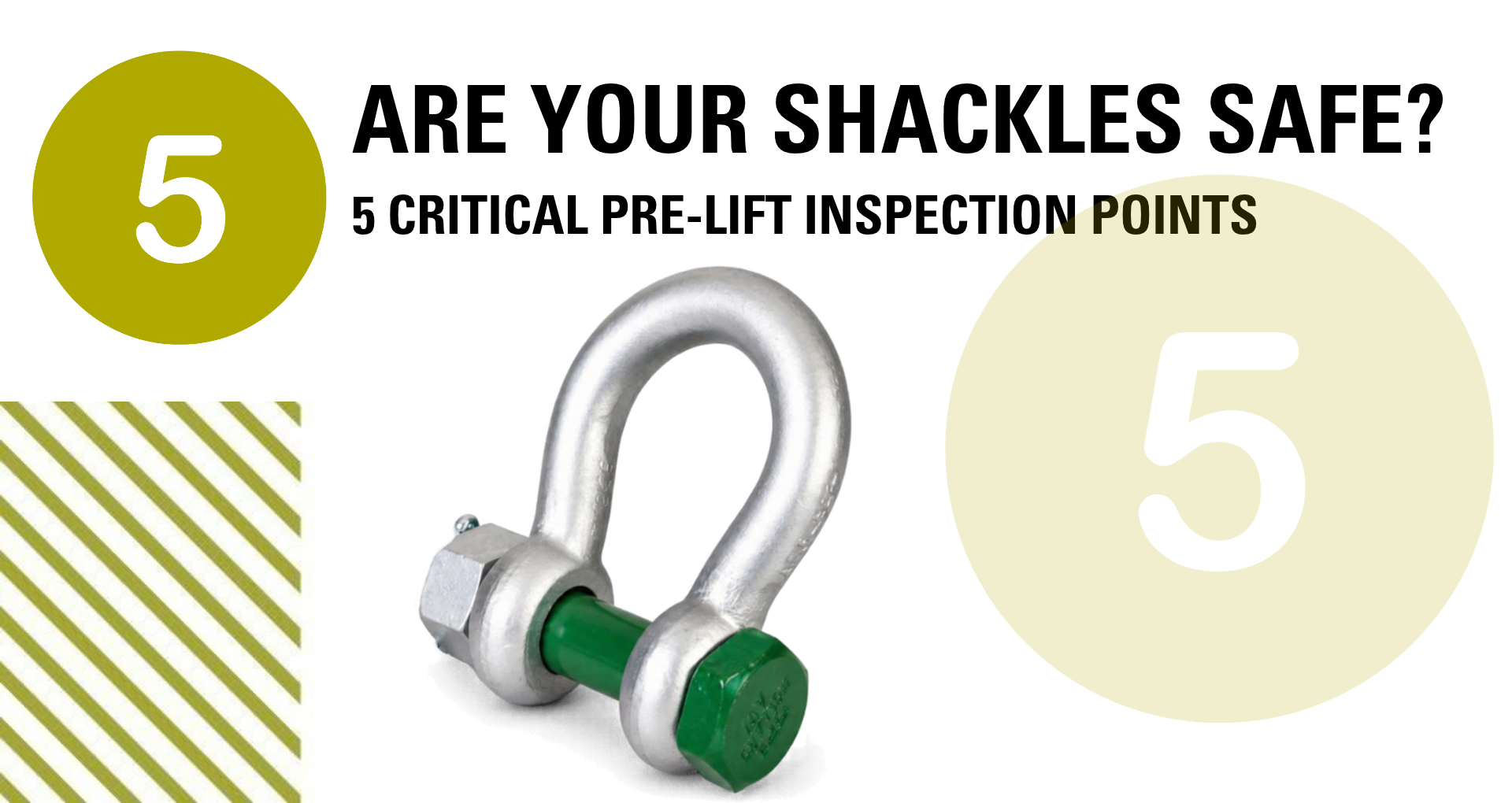
In this blog, our team runs through the five critical pre-lift inspection points we'd expect every rigger to check before every lift: what to look for, why it matters and when to take a shackle out of service.
1. Can you read the markings?
Every shackle should carry clear, legible markings, including:
· The Working Load Limit (WLL)
· The grade
· The manufacturer's identification and a traceability code
· The relevant standard and compliance marking
If you can't read the WLL, you can't confirm the shackle is suitable for the load. Worn, painted-over or missing markings are a reason to withdraw the shackle from use. Also check that the shackle matches its certificate and that its thorough examination is in date. On every shackle you hire, make sure the unique ID on the body matches the paperwork supplied.
2. Is the body distorted?
Look closely at the bow and the jaws for:
· Stretching or opening of the jaw
· Bending or twisting
· Body that no longer sits parallel
· Pin holes that are out of alignment
Any visible deformation suggests the shackle has been overloaded at some point. On large shackles, early distortion can be hard to see by eye, so measure the jaw opening against the manufacturer's dimensions or a known good shackle. Never attempt to straighten a distorted shackle. Withdraw and replace it.
3. Is the pin correct, straight and properly secured?
The pin takes a lot of abuse and is often the first place a problem shows up. Check that:
· The pin is straight, with undamaged threads
· It's the correct pin for that shackle body. Never mix pins between shackles, and never substitute a bolt or a piece of rod
· On a screw pin shackle, the pin is fully seated and can't back out under load
· On a safety pin shackle, the nut is fully engaged and the split pin is present and correctly fitted
· There's no visible wear or reduction in the pin's diameter
Larger pins are heavy and more challenging, which makes it tempting to cut corners on fitting them. A pin that's only part-engaged is one of the most common causes of shackle failure on site.
4. Any wear, corrosion or surface damage?
Give the whole shackle a visual and tactile check. Watch for:
· Wear in the bow or at the pin bearing point. Check the manufacturer's limits, as many specify replacement once the section has reduced by around 10%
· Cracks, nicks and gouges, especially at high-stress areas
· Corrosion or pitting that goes beyond surface rust
· Signs of heat damage, weld spatter or arcing
· Handling damage from dragging, dropping or knocking against steelwork, which is more likely with heavy shackles
Shackles should never be welded, heated, ground or otherwise modified. If there's any doubt about the condition of a shackle, take it out of service.
5. Is it the right shackle, and is it rigged correctly?
A shackle in perfect condition can still fail if it's used incorrectly. Before you lift, confirm:
· The WLL is suitable for the load and the sling angle. Remember to include the weight of the shackles and other rigging in your load calculation, as it adds up on heavy lifts
· You've chosen the right type for the job. A wide-body shackle, for example, has an enlarged bow radius that helps protect slings and wire ropes, but it still needs to be loaded correctly
· The load is centred in the bow and not pulling at an angle. Side loading can significantly reduce a shackle's WLL, so check the manufacturer's guidance
· Slings, hooks or other fittings aren't crowding the pin or forcing the shackle to load unevenly
· The pin can't be rotated or unscrewed by contact with the load or a rope
If the rigging can't be arranged so the load is in line, use a different shackle or configuration rather than accepting a reduced WLL.
Hire shackles you can trust
Whether it's a standard bow shackle or a heavy-duty wide-body shackle for a major lift, LGH's hire equipment is thoroughly inspected, tested and certified by our experienced team of engineers, giving you confidence in every lift.
Browse our shackle range and learn more about our testing and certification services, or speak to one of our lifting experts on 03704 247 247. Alternatively, contact us online to discuss your requirements.
Frequently asked questions
How often should shackles be thoroughly examined?
Under LOLER, lifting accessories such as shackles should normally be thoroughly examined every six months, unless a written examination scheme prepared by a competent person specifies a different interval. A thorough examination does not replace a pre-use check.
What markings should be visible on a lifting shackle?
The Working Load Limit, grade, manufacturer's identification, traceability code and relevant standard or compliance marking should be clear and legible. The shackle identification should also match the supplied documentation.
When should a shackle be taken out of service?
Withdraw the shackle if its markings cannot be read, the body or pin is distorted, the pin is incorrect or damaged, or there is excessive wear, corrosion, cracking, heat damage or another condition outside the manufacturer's limits.
Can shackle pins be mixed or replaced with a bolt?
No. The pin must be the correct pin for that shackle body. Pins should not be mixed between shackles, and a bolt or piece of rod should never be used as a substitute.
Does side loading reduce a shackle's capacity?
Yes. Side loading can significantly reduce the shackle's Working Load Limit. The load should be centred in the bow and the manufacturer's guidance should be followed for the selected configuration.