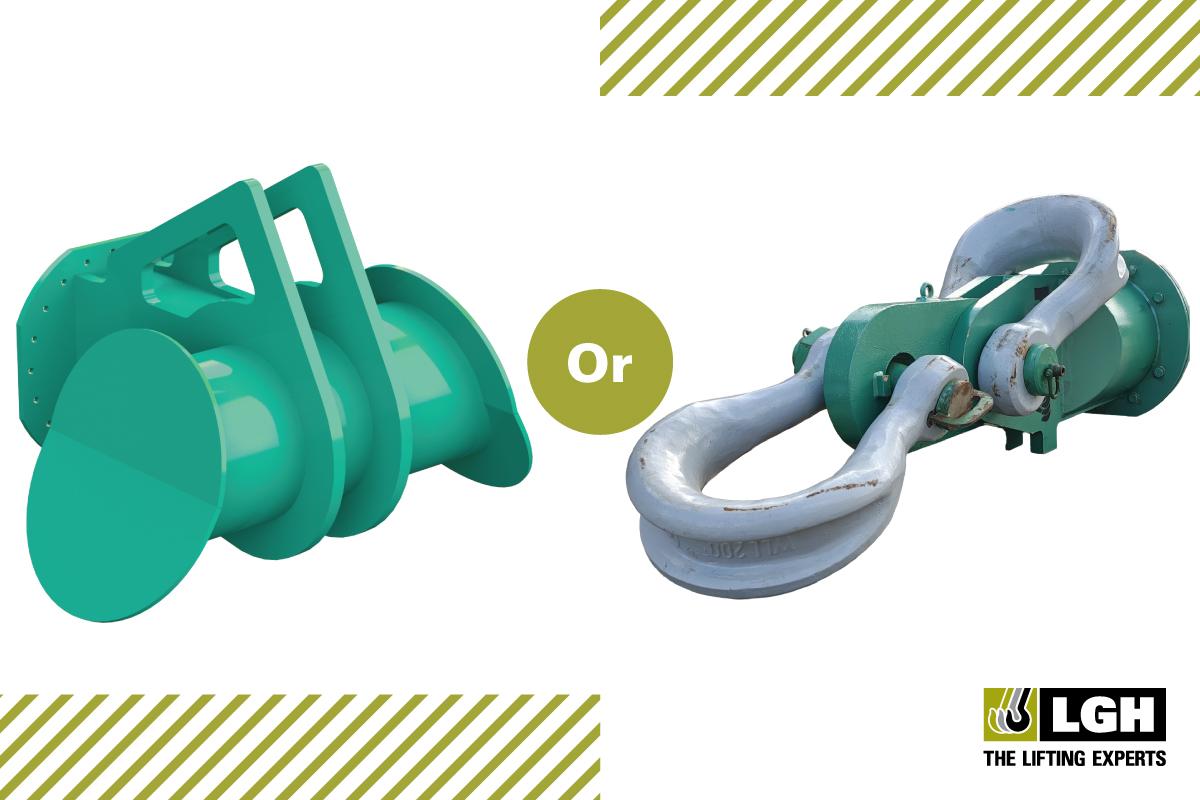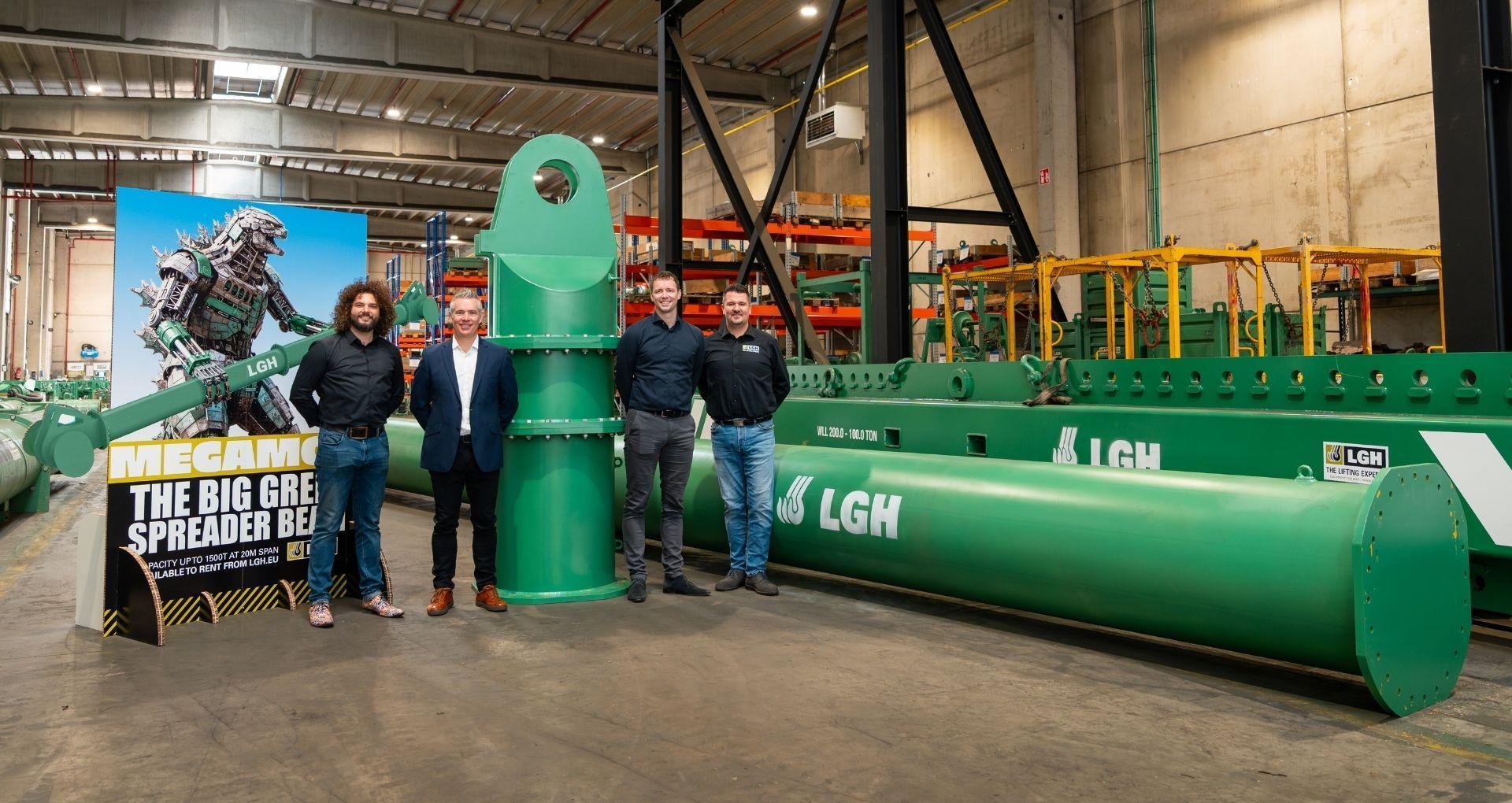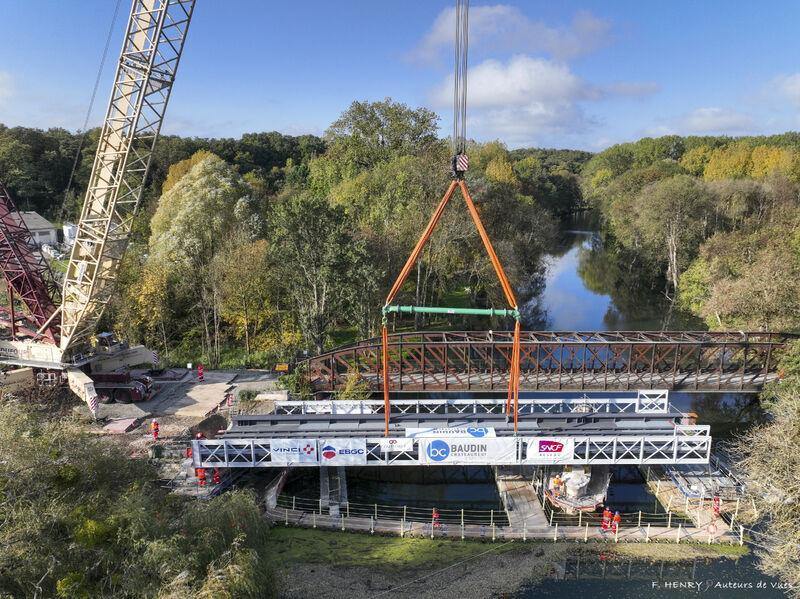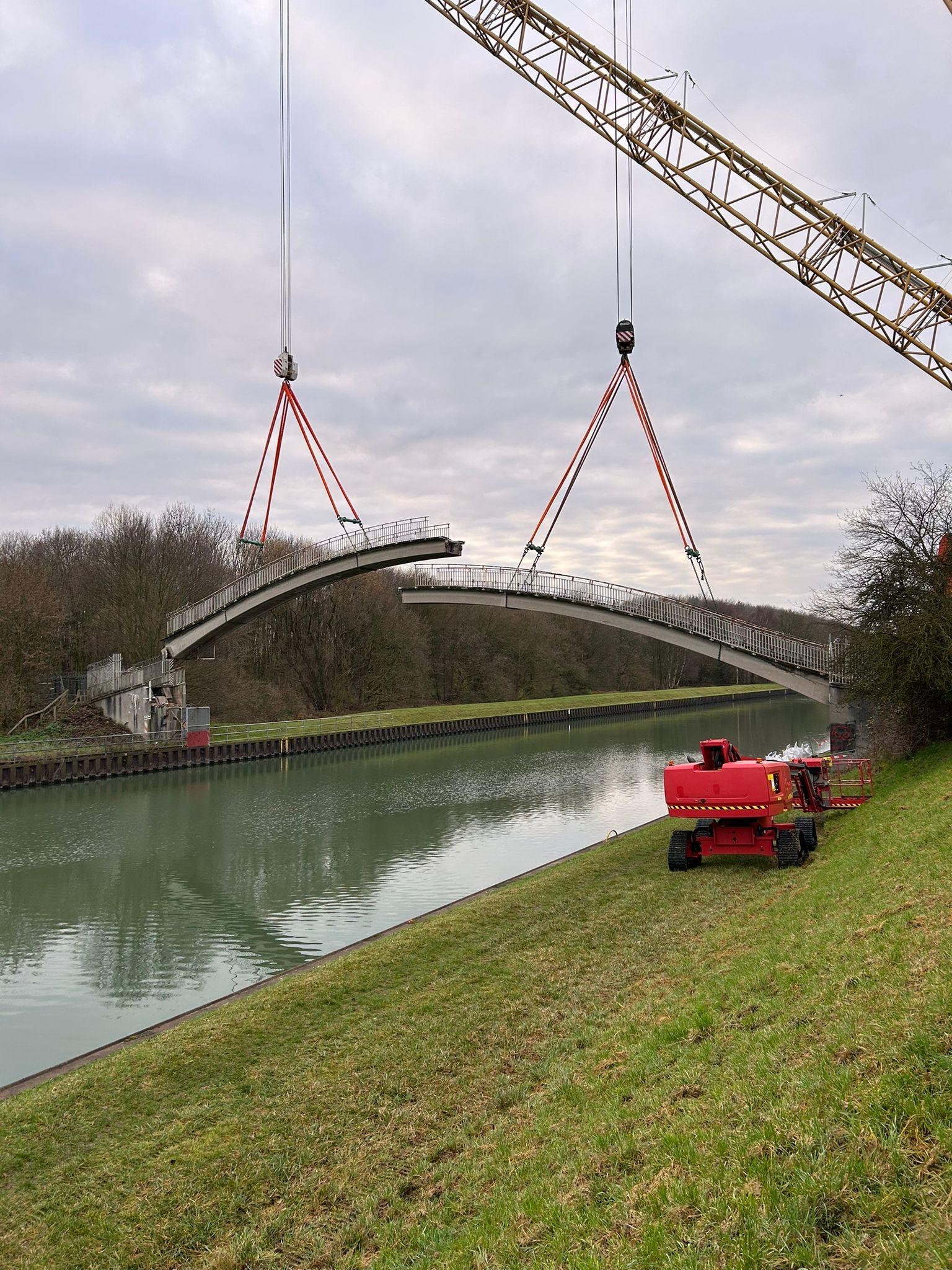
When you’re planning a lift, every decision you make influences safety, efficiency, and cost. One of the most overlooked choices is also one of the most impactful: whether to use traditional shackles or switch to trunnion ends.
Both trunnion ends and shackles have their place in lifting operations, and understanding that nuance is what keeps lifts safe, predictable, and efficient.
In this blog, we’ll look at how the two compare, where they overlap, and how each one actually functions in practice. We’ll also break down the advantages and disadvantages of both, giving you a clear, balanced view of when each option makes the most sense for your lift.
Differences and Similarities
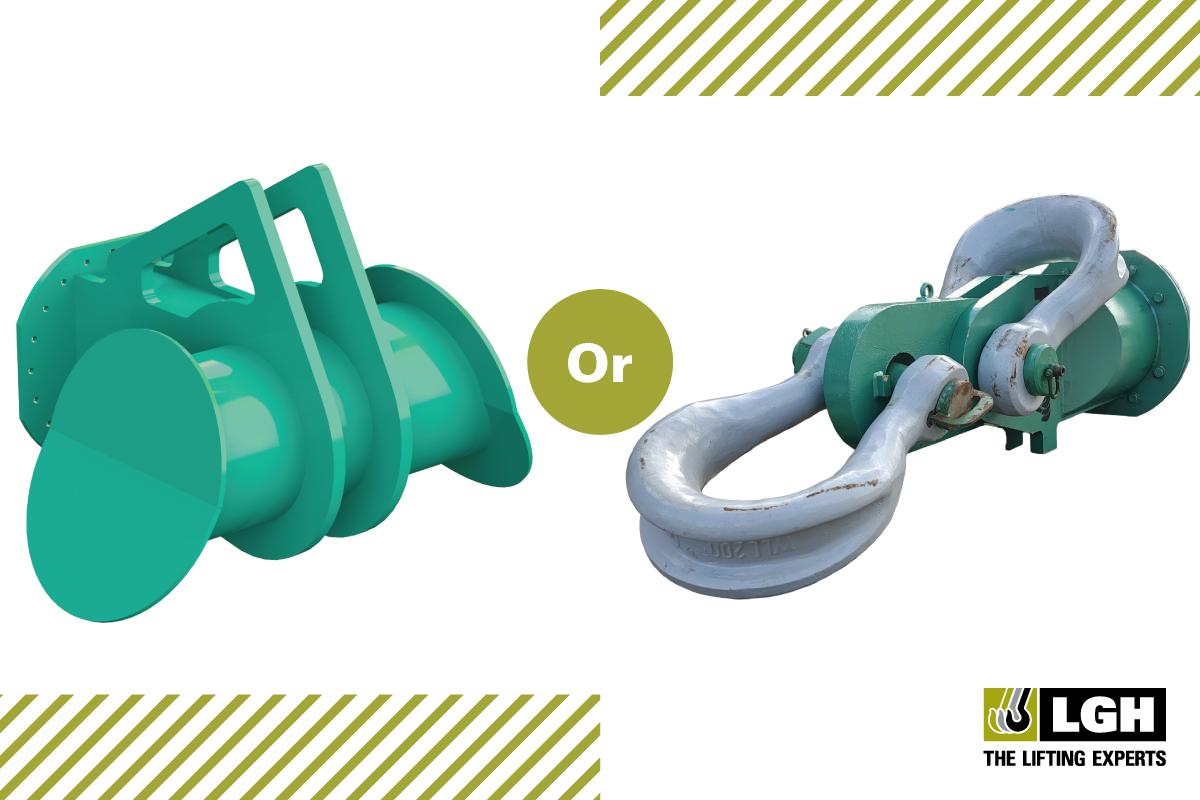
Both trunnion ends and shackles serve the same fundamental purpose in lifting operations: they create a secure connection point between lifting equipment and the load. Each is designed to transfer forces safely and reliably during a lift.
However, the way they achieve this differs significantly.
Shackles are standalone connection components used to link slings, chains, and lifting hardware. They are widely used across general rigging applications because of their versatility and simplicity.
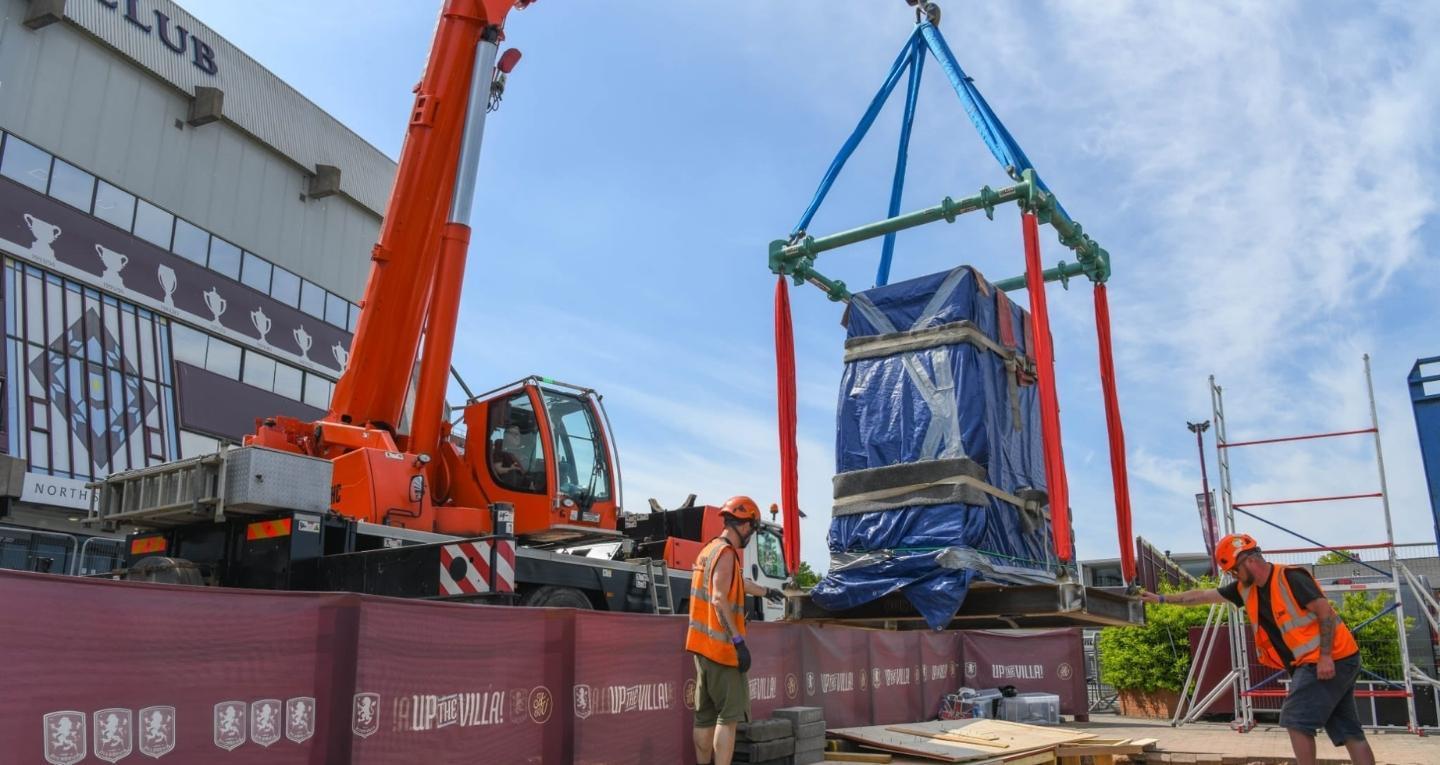
Trunnion ends, on the other hand, are integrated connection points built directly into spreader beams or lifting systems. Instead of adding hardware between components, they create a direct interface for slings, reducing the number of elements in the rigging configuration. Check out our blog for a more detailed overview of the top 5 reasons why you should choose Trunnion ends for your next project.
In practice, both solutions support safe lifting. Trunnion ends are typically chosen for high-capacity, engineered lifts where precision, space, and load behaviour play a critical role. Shackles, meanwhile, remain the go-to option for everyday rigging because they adapt easily to different setups, can be swapped or adjusted on site, and offer the flexibility needed for routine or varied lifting tasks.
How do Trunnion ends and Shackles work
Shackles function as mechanical connectors. A sling, chain, or rope is attached to the bow of the shackle, while the pin secures the connection. Load forces are transferred through the shackle body and into the lifting system. This method is proven, flexible, and easy to deploy, making shackles a standard tool in many lifting scenarios.
Trunnion ends operate differently. They are mounted directly onto the ends of spreader beams or modular lifting frames and act as dedicated lifting interfaces. Slings attach directly to the trunnion, creating a streamlined connection without the need for additional hardware.
Many trunnion systems are designed to allow controlled rotation or alignment under load. This helps distribute forces more evenly, reduces stress concentrations, and supports more stable lifting behaviour, especially in complex or high-capacity operations.
Advantages and Disadvantages
Trunnion Ends
| Adventages | Disadventages |
| They make heavy lifts safer and easier | Required engineered lifting systems or compatible spreader beams |
| They cut rigging time dramatically | Higher upfront planning and specification effort |
| Ideal where headromm is limited | Less flexible for general purpose rigging |
| They improve lead distribution automatically | Not always necessary for smaller or routine lifts |
| They handle angular movement better |
| Advantages | Disadvantages |
| Highly versatile and suitable for a wide range of lifting applications | Add extra components and weight to the rigging setup |
| Simple and familiar to most rigging teams | Increase rigging time in complex lifting configurations |
| Easy to install, remove, and replace on site | Required more headroom due to their physical size |
| Available in many sizes and load capacities | Can create additional stress points if not perfectly aligned |
| Ideal for standard lifting configurations and temporary connections | Handling large shackles can be an ergonomic and safety challenge |
Conclusion
Choosing between trunnion ends and shackles isn’t about declaring a winner; it’s about understanding what each brings to the table. Trunnion ends excel when lifts are heavy, complex, or space-restricted, offering smoother handling, better load distribution, and faster rigging, provided you have the right engineered setup in place. Shackles, on the other hand, remain a dependable, versatile staple for everyday lifting, especially when teams need simplicity, flexibility, and quick on-site adjustments.
Both pieces of equipment have clear strengths and practical limitations. The key is matching the equipment to the lift. When you understand how each works, where they differ, and where they overlap, you can choose the option that delivers the safest, most efficient outcome for your specific operation. Contact our expert team on 03704 247 247 or email us at enquiries@lgh.co.uk. You can also complete the Contact Us form or alternatively use our chat box and we'll get back to you as soon as possible.